
We’ve all been there. You walk into the library or the bookstore with the best of intentions – you’re going to get a book for your child. And then you get to the children’s section. Wham! 5.3 billion options (totally accurate number…) are staring you in the face.
But which one is actually going to capture your child’s attention?
As a librarian, I’ve watched families come in time and again for a “good book” when what they really need is the right book for their very awesome kid. What they really need is a better way to simplify and narrow it down.
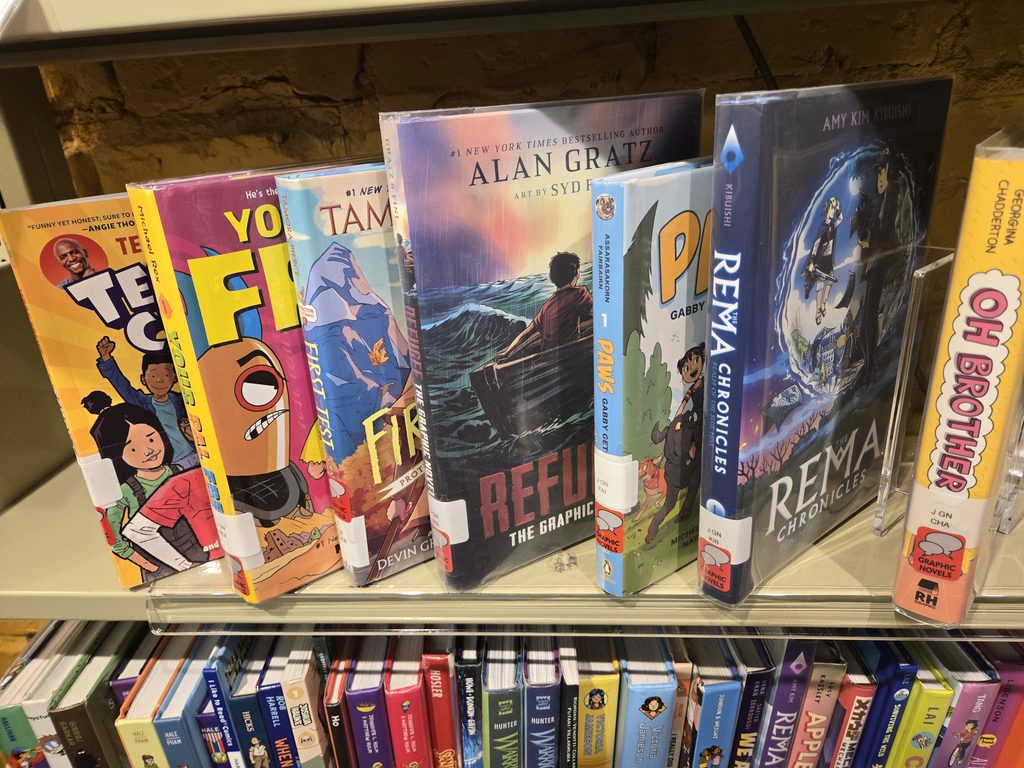
Stop Looking for the “Best” Book
You are wasting your time – there is no such book. It does not exist.
There is no universal best book for child out there. And truthfully? Even the best-for-my-kid-right-now book won’t stay that way. It will grow and change with your child. Constantly. And this is exactly what we want.
The book that talks about your child’s current obsession, makes them curious about other things, feels doable to THEM, encourages them to turn the page, and meets them where they are. That is the book you want. Not the “most impressive” one.
1. Start With What Your Kid Already Loves
Stop for just a minute. Picture the last several evenings with your child. What is he or she talking about? What are they describing – in details so minuscule you did not know such could exist – to you? What are they passionate about? What do they want every movie/game/toy that get to relate to?
Now go get that book.
If you can connect to their favorite thing of the month, there’s the motivation. If your baby has told you the difference in a jaguar and a black panther in the last week, go get that kid some nonfiction books about mammals, large cats, and predators. If your child doesn’t want to do anything but play video games, go get the strategy books they give them hints and codes to help them win big.
Look for your opening; deliver that book.
2. Pay Attention to HOW Your Child Likes to Read
I’m gonna hold your hand while I say this. There is more than one way to read a book. It’s okay if your child prefers to read in a way that doesn’t feel natural to you – you’re not the one we’re choosing for right now (no worries, we’ll get to you!).
You can have two people – yes, I said people, adults do this too – who love the same book but prefer to enjoy it in different formats. You can have three kids standing side-by-side who each read Anne of Green Gables but not in the same format. One enjoyed reading the original novel silently, one flew threw the graphic novel version, and another listened to the audiobook while playing in the backyard. All read the same story.
When finding books that will interest your children, we don’t want to just look at what the book is about. We also want to consider they way they prefer to consume information and the actual experience of reading. Graphic novels and picture-heavy books, for example, are doing great big things to pull kids who resist text-heavy chapter books into the realm of bookworms.
3. Let the Reading Level Guide You – But Don’t Let It Run the Show
If you’re anything like me, mama, you totally remember Johnny Depp reminding us that sometimes things are more like guidelines than actual rules – this is another one of those times. This one makes me twitch a little bit as a librarian; some parents will not let their kids read a book if it is “not on their level.”
No ma’am. We are not going to be that person. Absolutely use levels to guide you; especially when you don’t stare at and analyze books all day like I do (and I still haven’t read them all!!). They are a wonderful tool. You heard that, right? Tool. Not an end-all-be-all. Levels are an excellent place to start.
Here’s the thing. Different companies have different levels of – well – leveling their books. Not everyone is operating with the same standards in mind. There are different publishers, educators, and reviewers out there doing their thing. And, just like your kiddo, they are all different. It’s not uniform. Think of levels as more of a springboard. You have a level you believe your child is at BUT you could probably go up or down a level (or more, depending on the type of levels you’re looking at) and still be in your child’s comfort zone.
Now here me on this. If your kid wants to go outside that level – LET THEM. Let them choose the easier book they already know they love – there is some serious skill-learning to be had by rereading. If they’d like to go for a book that pushes the boundaries when it comes to difficulty – you guessed it – let them. How do you think growth happens? Not just by doing things we already know how to do!
4. Don’t Be Afraid of “Easy” Books
Like we just discussed, “easy” is a relative term and there is absolutely value in rereading and going for easier books. Do you know what I do to this day when I’m in a reading rut? I pull out one of my favorite middle grade or young adult series books that I’ve already read a million times before. No, seriously. I’m in the double digits on most of them on my goodreads account – and I’ve only had that since I started working in libraries post-undergrad.
There are so many reasons why easier books are good for your kiddos. Let’s start with confidence. If you worked on something repeated and every single time you felt inadequate, would you continue to do it? That’s what happens if you make your child stay only on their currently level. If they second that move up you make them read the “harder” books, they will believe that reading is always hard and that they are always going to be bad at it. And that will kill a love of reading every time.
So let that fourth grader that reads at a middle school level grab a picture book. Let the middle schooler read Diary of a Wimpy Kid a dozen more times. They’re building confidence, enjoying stories and characters they already love, and working those reading muscles. Think of it like weight lifting, mama. Yeah, you can do ten pounds but maybe you can’t do as many reps. But you can absolutely do more reps with only the five pounds. Both methods build muscle and both can be used in a well-rounded workout!
5. Yes, Graphic Novels Count
So speaking of not judging what our kids choose to read – graphic novels. GRAPHIC NOVELS ARE REAL BOOKS. You heard me, right? They are, I promise. In fact, some of the most academically-advanced students (of all ages) I know are massive graphic novels fans. I literally cannot keep up with purchasing enough books in my graphic novel section to out-pace my regulars.
Seriously, do you have any idea how many different skills are being built and enhanced while reading graphic novels? Following sequence, interpreting text and images, understanding dialogue, inferring meaning, following characters and plot, making connections between visual and written information… and that’s no where near an exhaustive list. Why do you think all the earlier books like picture books and easy readers have images in them?
Graphic novels are most definitely a legitimate form of reading. They build skills (and are even better for certain skills!) just like standard novels do. And, between us, they’re one of my favorite go-to moves for enticing reluctant readers.
6. Series Books Are Your Friend
There are days I feel like I might pull my hair out if I have to hear my son tell me about one more Who Would Win…? book. Seriously. I know so many random facts about gorillas vs. cheetahs it would blow your mind. But you know what? He can’t wait to pick up the next one. And there are – at the time of me writing this – 36 books. That’s 35 times that I didn’t have to use any part of my energy to help my child find a book he liked.
This is 100% a work-smarter-not-harder moment, mama. They already have characters your kids love, worlds you already know they enjoy, and a certain level of predictability that is sometimes sooo comforting. And if your child enjoyed the first book, they are likely highly motivated to find out what happens next!
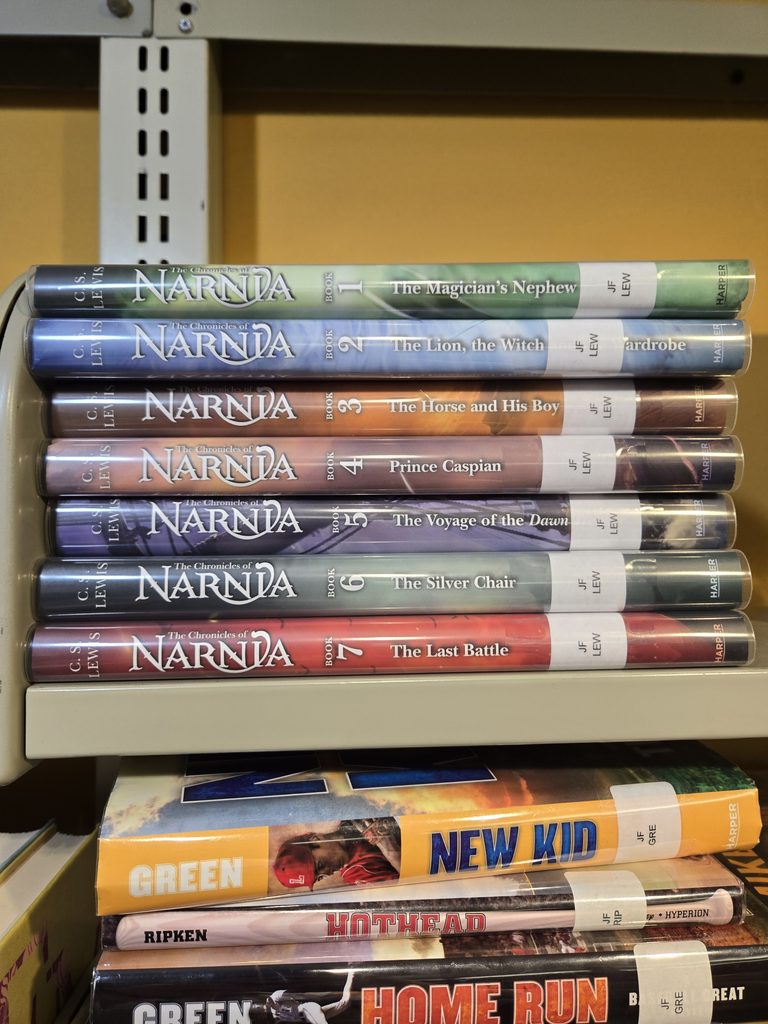
7. Use the Library Like a Librarian Would
When you’re exhausted and just don’t have the time or energy to brain – go to the library. And if you get in there and you and your kiddo are still uninspired? Ask your librian.
“My 8-year-old loves dinosaurs but does not like to read fiction.”
“My kid can read independently at a higher level but gets frustrated with longer books.”
“My daughter loves the Dog Man books. What else would she like?”
Feed your librarian a few lines like this and your child will leave with all the suggestions. Plus, you’ll be giving your librarian the most fun they’ve had all afternoon!
8. Let Your Kid Abandon a Book
Sometimes the book just doesn’t work for the child.
This is not a problem. You know what it is (outside of just a really good reading practice)? It’s a moment where your child gets to learn to trust his or her own judgement. A moment where they get to be in complete control of their destiny in a world where – let’s be honest – they don’t get much of a voice. (ZERO judgement here, mama. I too have plenty of times where I just have to let the babies know this is a because-I-said-so moment we’re going with. You’re welcome to question and ask me why, but you still have to hop on this train.) Strengthen that independence in every way you can safely, and reasonably, do so. The world needs more humans that know their own minds.
Sometimes it’s the character. Sometimes it’s the writing style. May they just aren’t in the mood. (Librarians do it too – I’m getting much better at DNFing books (did-not-finish) than I once was.) But please remember – choosing not to finish one particular book is NOT the same as not liking reading.
9. Don’t Only Choose Books They Can Read Independently
Life is all about balance. Doing the same thing all the time gets boring. Switching up how we go about approaching a book can make it a little more fun and possibly even pull us out of a slump.
Reading independently is AMAZING. I’m a huge personal fan! But you know what else is amazing? Sitting and listening to someone else read to you. You know what’s even more amazing? Enjoying a story together.
My son is an advanced reader who solos the reading thing all the time and you know what? He will drop his book in a heartbeat and run over to listen when I start to read to his little sister. And we have enjoyed several whole-family-novels that we only read in the evening as a family. Does it sometimes take forever to get through a single book because life? Yep. Is it still worth it? Absolutely.
Do you have dishes or dinner that needs to happen but still want to read a book with your kids? Put on an audiobook! There is no reason that family novel can’t be read to you too! Just enjoy books together – that’s really what it all comes down to.
10. Your 5-Question-Book-Finding Formula
Is there a one-size-fits-all formula for choosing a book? Nope. Sorry, it’s not that cut-and-dry. BUT, for my type-A mamas out there who just really need a system to function when life gets crazy – these are some solid questions to ask yourself when looking for books.
- What does my kid love?
- What format(s) do they enjoy?
- Is this book manageable for them?
- Will they want to know what happens next?
- Could we read/listen to it together?
This certainly won’t automatically pick the book for you, but it will help you dramatically narrow down the field.
What If My Child Says They Hate Every Book?
And when your child still says they hate every book… try again, mama.
I know. But do it anyway. There are so many options out there; you will find something they can relate to. Try a new format. A different topic. Shorter. Offer a graphic novel. Mix in some nonfiction. Read aloud. Ask your local librarian. Just keep trying, mama.
And never forget – a child who doesn’t like the books you’ve offered does NOT equate to a child who doesn’t like reading.
A Librarian’s Secret: You Don’t Have to Find the Perfect Book
The goal is not to find the secret sauce that converts your child to a lifelong reader overnight, mama.
It’s to keep giving them opportunities. Opportunities to love/hate/be completely indifferent to a story. Opportunities to discover new voices and perspectives. A chance to say “Hey, I think I actually like this.”
It’ll look different at different times and stages. A graphic novel on the couch while they ignore you. An audiobook on the way to vacation while trapped in the car for four hours. A beautiful bedtime book with everyone not fighting on a single bed for the entire story (hey, we can dream!).
It all counts as another opportunity to fall in love with books. You’ve got this, mama.
If you’re starting from the bigger question of how to get your kids to read, start here How to Get Your Kids to Read When You’re An Exhausted Mom.
Want a simple plan for building reading into everyday family life? Grab my free Exhausted Mom’s Guide to Raising a Reader!